Product Description
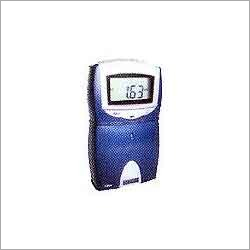
We as a predominant exporter, manufacturer and supplier are occupied with manufacturing an exhaustive array of Roughness Tester that is recognized for features like precision in estimation and toughness. These pocket-size & economically priced equipment is fabricated using high quality raw material, to make these in consistence with set industry benchmarks. This Roughness Tester highlights outside adjustment at console with both Ra and Rz parameters in one instrument. Our range is used for measuring a shifted extend that is appropriate for most material, particularly level, external chamber and slanting surface material.
Features:
- Measurement can be done by remote control.
- Sample length : 0.8 mm
Additional Information:
Item Code: TR-150
High-Precision Measurements with Versatile ApplicationsDesigned with a robust piezoelectric crystal pickup and 10 m diamond probe, the Digital Roughness Tester delivers accurate surface finish analysis for both metal and non-metal specimens. Its wide measuring range (Ra: 0.0510 m; Rz: 0.150 m) ensures compatibility with various industrial standards. The tester is ideal for quality control, research, and material inspection tasks in manufacturing, engineering, and laboratory environments.
User-Friendly Operation & Intuitive InterfaceEquipped with an LCD digital display and streamlined controls, this roughness tester is crafted for ease of use by professionals and technicians alike. It supports both auto and manual calibration modes, and with selectable cut-off lengths, users can tailor measurements to their specific requirements. The testers automatic response, fast readout within two seconds, and storage of up to 100 measurement groups amplify operational efficiency.
Advanced Connectivity and Durable DesignThis roughness tester features a USB interface for reliable digital data output to printers or computer systems, ensuring straightforward documentation and analysis. Housed in a protective carrying case, the device is built for portability and durability. The rechargeable 9V battery and AC adapter provide ample flexibility for extended use in the field or laboratory.
FAQs of Roughness Tester:
Q: How is the roughness tester calibrated, and can it be performed automatically?
A: Calibration can be completed using either the auto or manual mode, depending on user preference or specific application demands. The integrated auto-calibration ensures user convenience and measurement consistency, while manual mode offers precise control for specialized tasks.
Q: What types of surfaces and specimens can this tester measure?
A: This instrument is suitable for assessing the surface roughness of both metallic and non-metallic specimens. It accommodates single specimens with a minimum length of 17.5 mm and a maximum height of 60 mm, making it versatile for various industrial and laboratory applications.
Q: Where can the measurement data be stored and how can it be output?
A: The device can store up to 100 groups of measurement data internally. Data can be exported in digital format via the standard USB interface to a computer or printer, simplifying record-keeping and quality documentation.
Q: What are the benefits of the testers piezoelectric crystal pickup and diamond probe?
A: The piezoelectric crystal pickup and 10 m diamond probe provide high sensitivity and lasting durability, allowing the device to deliver accurate, repeatable measurements across a broad range of surface profiles and materials.
Q: How portable is the instrument, and what makes it suitable for both field and lab environments?
A: Weighing just 1.5 kg, the roughness tester comes with a protective carrying case, is battery-operated, and offers an AC adapter. This portability, combined with a rugged build, makes it convenient for field work as well as stable lab usage.
Q: When is it best to use each of the selectable cut-off lengths during testing?
A: Cut-off lengths of 0.25 mm, 0.8 mm, and 2.5 mm allow adaptation to different surface roughness scales. Shorter cut-off lengths are ideal for finer surfaces, while longer ones suit coarser textures, ensuring the most relevant and detailed analysis for your specimen.





 Send Inquiry




 Send Inquiry

